I’ve had the same conversation four times in the last two weeks, with four different people, in four different contexts. Each time, someone asked me some version of the same question: “Is AI going to replace program managers?”
My answer hasn’t changed: no. But the job is changing faster than most PMs are prepared for, and the reason isn’t the AI everyone’s been talking about for the last two years. It’s the AI that just showed up.
The shift nobody quite named yet
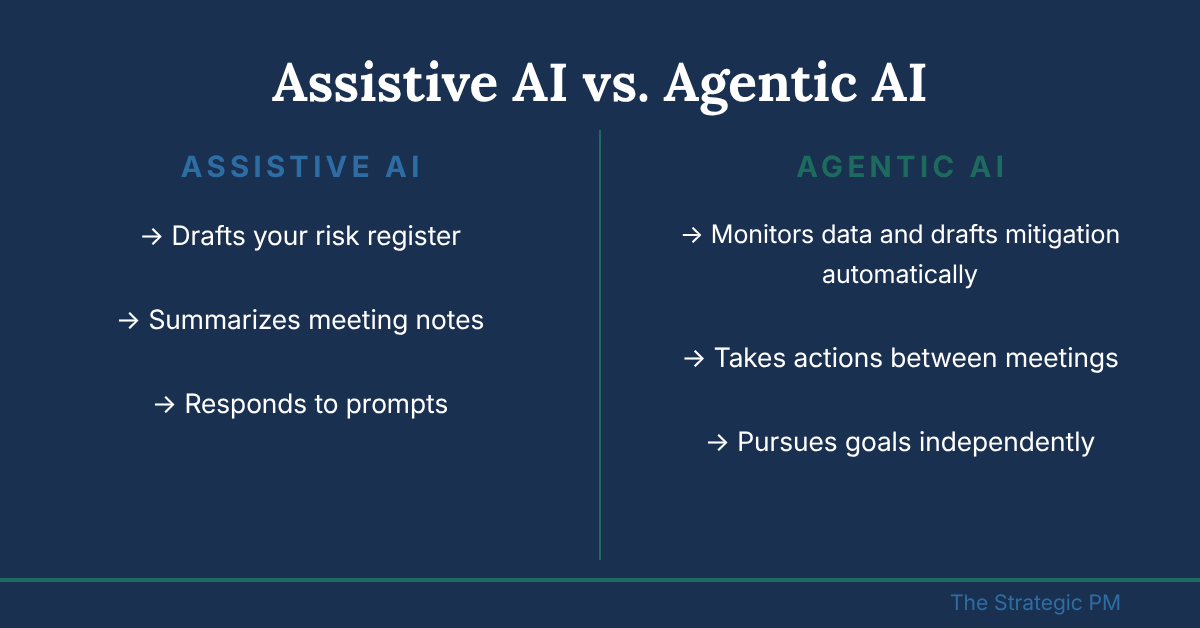
Most of the AI conversation in program management has been about augmentation. AI helps you write status reports faster. AI summarizes meeting notes. AI drafts your risk register. Useful, but fundamentally assistive. You’re still the one driving.
Agentic AI is different. These are systems that don’t just respond to prompts, they pursue goals. They can break down a task, sequence steps, call tools, check their own work, and keep going without you in the loop for every decision. An agentic AI system doesn’t just summarize your risk register. It can monitor a project’s data sources, flag an emerging risk, draft a mitigation plan, and route it to the right stakeholder, all before you’ve opened your laptop.
That’s not a better assistant. That’s a system that’s starting to do some of the actual program management.
So is it a threat?
Here’s the honest answer: it’s a threat to the parts of the job that were never the real value anyway.
Status aggregation. Meeting scheduling. First-draft risk identification. Basic dependency tracking. These are real tasks, but they were never what separated a good PM from a great one. They were the overhead that ate the time you needed for the actual job: judgment calls under ambiguity, stakeholder trust-building, and knowing which fire to put out first when three are burning at once.
Agentic AI is coming for the overhead. That’s not a threat to your career. That’s a threat to the version of the job that was already exhausting you.
Where it gets real
The harder question isn’t whether agentic AI replaces parts of the job. It’s whether you’re ready to manage a team that includes AI agents as participants, not just tools.
That’s a different skill than using AI. It’s governing it.
If an agentic system flags a risk and proposes a mitigation, who approves it? If it drafts a stakeholder update, who reviews it before it goes out? If it’s wrong, who’s accountable, and how fast does anyone find out?
These aren’t hypothetical questions anymore. They’re the actual job description for the next generation of program managers: not someone who avoids AI, and not someone who blindly trusts it, but someone who builds the structure that makes it safe to use at all.
The three things this actually requires
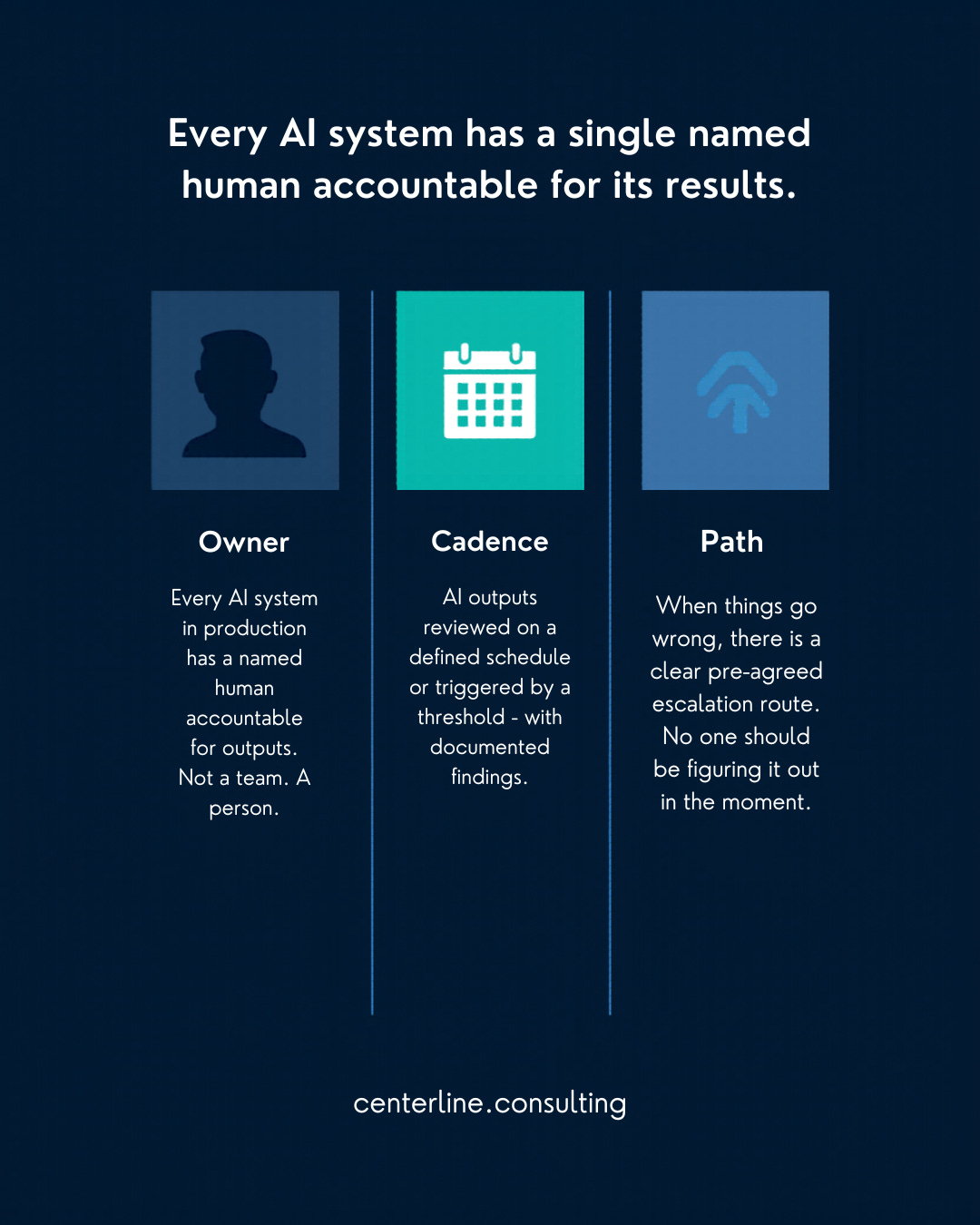
An ownership model. Every agentic system operating inside your program needs a named human who’s accountable for what it does. Not a committee. Not “the team.” A person who can answer for it.
A review cadence that matches the system’s speed. If an agent operates continuously, your review process can’t be a weekly status meeting. You need lightweight, frequent checkpoints calibrated to how fast the system actually moves.
A clear escalation path for when it’s wrong. Every agentic system will eventually do something you didn’t intend. The organizations that handle this well aren’t the ones with the most sophisticated AI. They’re the ones who decided, in advance, exactly what happens next when something breaks.
This is the same Owner, Cadence, Path framework that closes the AI governance gap more broadly. It applies here with even more urgency, because agentic systems move faster and touch more of the actual work than a chatbot ever did.
Friend, threat, or both
Both. That’s the honest answer.
Agentic AI is a genuine threat to the parts of program management that were busywork dressed up as value. And it’s a genuine friend to PMs willing to evolve into the role the next few years actually require: the person who designs how humans and AI agents work together, not the person who’s competing with the AI for the same tasks.
The PMs who thrive here won’t be the ones who resisted the shift. They’ll be the ones who got there first and built the guardrails before they were asked to.
If your organization is already running agentic AI inside delivery workflows without a clear ownership model, that gap is closer to becoming a problem than most leaders realize. The Honesty Audit is where Centerline starts that conversation. centerline.consulting/services